
30-day Japan fall foliage, Shanghai nights & Seoul sunsets
30-night Asia cruise from Tokyo, Japan to Hong Kong aboard Seabourn Encore.
Calling at Shimizu, Kagoshima, Nagasaki, Jeju City, Hiroshima, Matsuyama, Kochi, Osaka, Shingu, Busan, Incheon, Shanghai, Miyakojima, Hualien, Taipei and Hong Kong, with 7 days at sea. 17 ports of call across Japan, South Korea, China and Taiwan.
Seabourn Encore is an all-suite Seabourn ship: every suite is ocean-front, and premium spirits, fine wines, dining in every venue and gratuities are included in the fare.
Suite categories range from Veranda Suite to Owner’s Suite.
- 06 Nov 2027 – 06 Dec 2027
from $27,369 pp twin share *
Additional Pricing Information
- Veranda Suite from $27,369 pp twin share
- Penthouse Suite from $57,969 pp twin share
- Owner’s Suite from $71,994 pp twin share
* Prices and category availability are subject to change without notice.
Itinerary
Day 1 – Tokyo, Japan
Departs 07:00 pm.
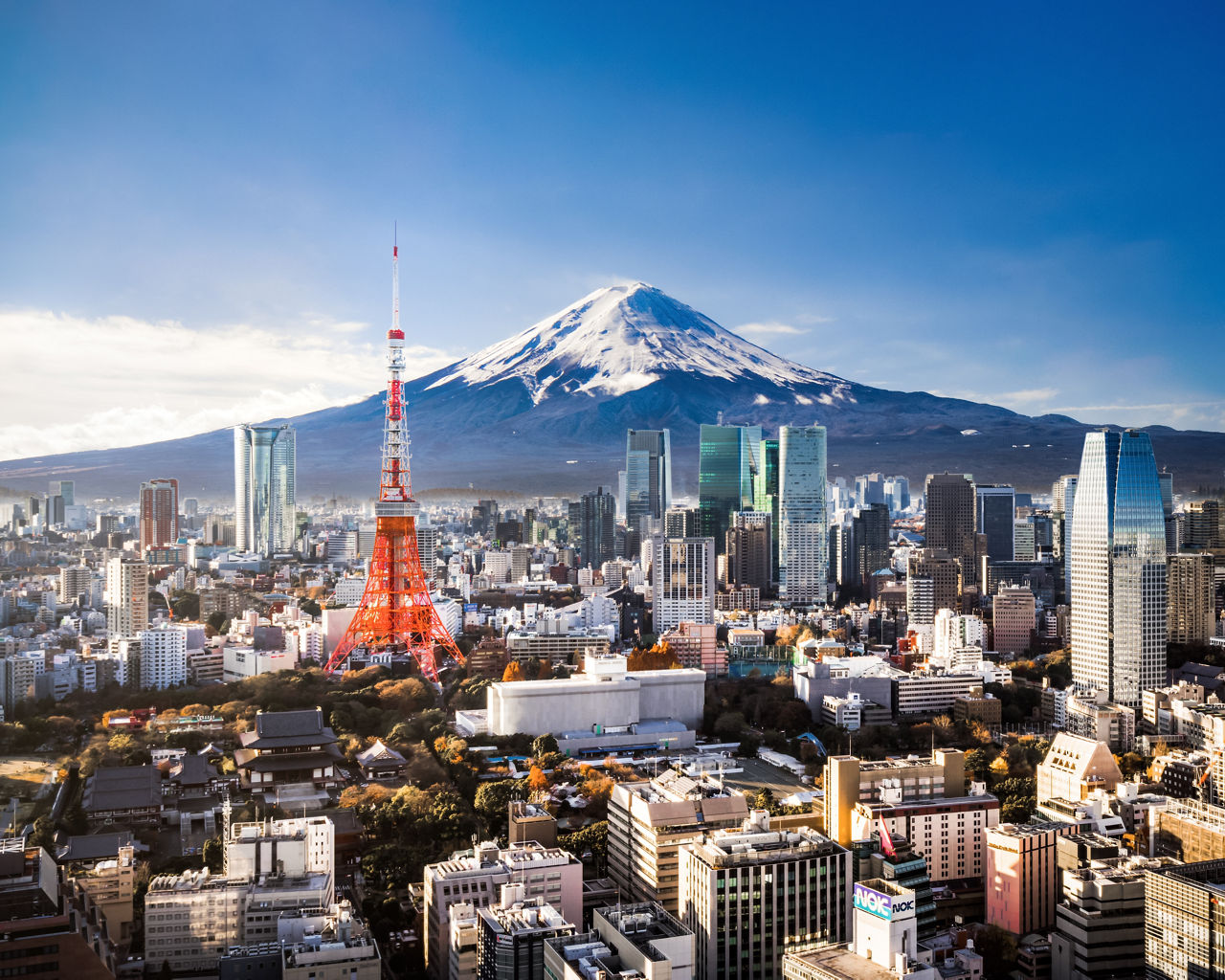
Contemporary Tokyo may be the most astonishing city on earth. It’s a paradoxical mix of ancient tradition and postmodern culture. The Ginza, an international shopping mecca, stands near the serene grounds of the Imperial Palace, and the hyper-speed of 21st century consumerism is mysteriously reconciled with the elegance and serenity of traditional culture. Tokyo provides the traveler with a dizzying experience.
Day 2 – Shimizu, Japan
Arrives 08:00 am, departs 06:00 pm.
Day 3 – At Sea
Day 4 – Kagoshima, Japan
Arrives 08:00 am, departs 06:00 pm.
From the 12th century to the Meiji Restoration of 1868, Kagoshima was the chief stronghold of the mighty Shimazu clan. The city lies at the top of the Satsuma Peninsula, a mountainous, geothermal wonderland of hot springs and geysers. The area is also rich in modern Japanese history: Saigo Takamori and the Satsuma samurai were leaders of the Meiji Restoration that toppled the shogun and restored the Emperor to power in 1868. In 1877, dissatisfied with the direction of the new government, Saigo led the Satsuma Rebellion, which ended in his death and the final defeat of the samurai.The symbol of Kagoshima is Sakura Jima – the volcanic island that sits just offshore. The volcano has erupted over 30 times in recorded history.
Day 5 – Nagasaki, Japan
Arrives 08:00 am, departs 05:00 pm.
For most travelers, Nagasaki is a symbol of the horror and the inhumanity of war. An estimated 75,000 people perished in 1945 when the city became the second target of a nuclear attack. Today, Nagasaki’s Peace Park and Atomic Bomb Museum draw visitors from around the world.But this beautiful city on Kyushu offers other sights. Often described as the San Francisco of Japan, the city occupies verdant hills surrounded by a deep-water bay. For three centuries, Nagasaki was Japan’s sole window on the world. The city is also celebrated as the setting for Puccini’s opera “Madame Butterfly.”
Day 6 – Jeju (Cheju) City, South Korea
Arrives 08:00 am, departs 08:00 pm.
Day 7 – Scenic Cruising Kanmon Strait
Day 8 – Hiroshima, Japan
Arrives 07:00 am, departs 10:00 pm.
On August 6, 1945, human history was irrevocably altered when the American bomber Enola Gay dropped an atomic bomb on Hiroshima. The bomb was code-named “Little Boy,” but its detonation left half the city in ruins and aflame. Today, Hiroshima is a monument not only to the destructive forces harnessed by men but also to the indomitable will of the human spirit to overcome tragedy. At the heart of the city lies Peace Memorial Park and the Atomic Bomb Dome. The gutted walls of the city’s old Industry Promotion Hall and the skeletal frame that supported its copper dome, vaporized in the blast, are instantly recognizable symbols of Hiroshima.Travelers to Hiroshima will discover a more serene note at nearby Miyajima Island. One of the top-three scenic spots of Japan, the island is home to ancient Itsukushima Shrine, a designated National Treasure.
Day 9 – Matsuyama, Japan
Arrives 07:00 am, departs 05:00 pm.
Matsuyama, Japan, is a peaceful haven where you can indulge in the healing waters of hot springs, satisfy your sweet tooth with amazing Japanese confections, and discover the area’s rich literary tradition. The largest city on the island of Shikoku, Matsuyama developed around its celebrated 17th-century castle. Lined with cherry trees, this extensive fortress is a museum of historic relics from weaponry to armor, calligraphy and art. It also offers phenomenal views of the city and the Seto Inland Sea from its hilltop perch. Another city hotspot is Dogo Onsen, Japan’s oldest hot springs. Known throughout Japan as a popular setting in the late author Natsume Soseki’s famed novel, Botchan, Dogo Onsen features an elegant and inviting public bathhouse where many a visitor renews their spirit. Matsuyama is also the birthplace of Masaoka Shiki, considered the “Father of Modern Japanese Haiku Poetry,” and there are several monuments to the haiku located throughout the city. From the hospitality at the hot springs to the renowned Matsuyama tarts and botchan dango (rice dumplings in bean paste), you won’t want to leave this port!
Day 10 – Kochi, Japan
Arrives 09:00 am, departs 06:00 pm.
Kochi sits on the broad alluvial plain facing Urado Bay. This city in Shikoku takes its name from the great feudal castle that sits at its very heart. Completed in 1611, Kochi Castle was the seat of Yamauchi Kazutoyo, a noted warrior who supported Tokugawa Ieyasu in his successful quest to become Shogun. Tosa Province and Kochi Castle were Yamauchi’s reward for faithful service. There is an historical irony here: 250 years later, a Kochi native son – a former low-ranked samurai and now ronin named Sakamoto Ryoma – played a pivotal role in bringing the Tokugawa Shogunate to an end and restoring the Emperor of Japan to political prominence. The prize once awarded for faithful service had become a hotbed of support for the Meiji Restoration.Kochi is one of the wettest places in Japan – and a frequent target for cyclonic storms or typhoons. Southeast of the city, warm oceans currents washing against the Aki Mountains create a subtropical landscape of hibiscus, palm and ficus at Muroto-Anan Quasi-National Park.
Day 11 – Osaka (for Kyoto), Japan
Arrives 08:00 am.
For centuries, Osaka was Japan’s cultural and commercial gateway to Asia – the point of entry both for trade goods and, most importantly, cultural influences that shaped Japanese society. From tea to Zen, from art to science and philosophy, Osaka was Japan’s contact with the great East Asian cultures that flourished in China and Korea. The city reached its zenith in the late 16th century, when the great feudal lord Toyotomi Hideyoshi made Osaka his capital. Toyotomi was master of Japan, and an immense administrative and commercial center rapidly developed around Osaka Castle. After Toyotomi’s death, the nation’s seat of power shifted from Osaka to a sleepy little fishing village called Edo – modern Tokyo. While overshadowed by Tokyo, Osaka remains Japan’s second largest city and a vital commercial center.Modern Osaka is home to monuments from Japan’s past including Toyotomi’s immense castle and the Sumiyoshi Shrine. The city is also your gateway to Kyoto, Japan’s ancient imperial capital and the nation’s cultural and spiritual center.
Day 12 – Osaka (for Kyoto), Japan
Departs 06:00 pm.
For centuries, Osaka was Japan’s cultural and commercial gateway to Asia – the point of entry both for trade goods and, most importantly, cultural influences that shaped Japanese society. From tea to Zen, from art to science and philosophy, Osaka was Japan’s contact with the great East Asian cultures that flourished in China and Korea. The city reached its zenith in the late 16th century, when the great feudal lord Toyotomi Hideyoshi made Osaka his capital. Toyotomi was master of Japan, and an immense administrative and commercial center rapidly developed around Osaka Castle. After Toyotomi’s death, the nation’s seat of power shifted from Osaka to a sleepy little fishing village called Edo – modern Tokyo. While overshadowed by Tokyo, Osaka remains Japan’s second largest city and a vital commercial center.Modern Osaka is home to monuments from Japan’s past including Toyotomi’s immense castle and the Sumiyoshi Shrine. The city is also your gateway to Kyoto, Japan’s ancient imperial capital and the nation’s cultural and spiritual center.
Day 13 – Shingu, Japan
Arrives 07:00 am, departs 04:30 pm.
Day 14 – At Sea
Day 15 – Tokyo, Japan
Arrives 08:00 am, departs 07:00 pm.
Contemporary Tokyo may be the most astonishing city on earth. It’s a paradoxical mix of ancient tradition and postmodern culture. The Ginza, an international shopping mecca, stands near the serene grounds of the Imperial Palace, and the hyper-speed of 21st century consumerism is mysteriously reconciled with the elegance and serenity of traditional culture. Tokyo provides the traveler with a dizzying experience.
Day 16 – At Sea
Day 17 – Osaka (for Kyoto), Japan
Arrives 07:00 am, departs 09:00 pm.
For centuries, Osaka was Japan’s cultural and commercial gateway to Asia – the point of entry both for trade goods and, most importantly, cultural influences that shaped Japanese society. From tea to Zen, from art to science and philosophy, Osaka was Japan’s contact with the great East Asian cultures that flourished in China and Korea. The city reached its zenith in the late 16th century, when the great feudal lord Toyotomi Hideyoshi made Osaka his capital. Toyotomi was master of Japan, and an immense administrative and commercial center rapidly developed around Osaka Castle. After Toyotomi’s death, the nation’s seat of power shifted from Osaka to a sleepy little fishing village called Edo – modern Tokyo. While overshadowed by Tokyo, Osaka remains Japan’s second largest city and a vital commercial center.Modern Osaka is home to monuments from Japan’s past including Toyotomi’s immense castle and the Sumiyoshi Shrine. The city is also your gateway to Kyoto, Japan’s ancient imperial capital and the nation’s cultural and spiritual center.
Day 18 – Scenic Cruising Kanmon Strait
Day 19 – Busan, South Korea
Arrives 08:00 am, departs 06:00 pm.
The second largest city in South Korea, Busan is your gateway to a fascinating land whose culture is a unique amalgam of old and new. Modern high-rise towers dwarf ancient Buddhist temples. The city’s bustling business district offers a stark contrast to the serene grounds of Yongdusan Park. In short, Busan is a microcosm of South Korea, a nation whose startling economic success often obscures one of Asia’s most sophisticated and venerable cultures.Busan was the scene of bitter fighting during the Korean War. The United Nations Memorial Cemetery marks the final resting place for the troops from 16 nations who gave their lives during the conflict.
Day 20 – At Sea
Day 21 – Incheon (Seoul), South Korea
Arrives 07:00 am.
Day 22 – Incheon (Seoul), South Korea
Departs 04:00 pm.
Day 23 – At Sea
Day 24 – Shanghai, China
Arrives 08:00 am.
Day 25 – Shanghai, China
Departs 05:00 pm.
Day 26 – At Sea
Day 27 – Miyakojima, Japan
Arrives 07:00 am, departs 04:00 pm.
Day 28 – Hualien, Taiwan
Arrives 08:00 am, departs 06:00 pm.
Day 29 – Taipei (Keelung)
Arrives 08:00 am, departs 06:00 pm.
The oldest Chinese reference to Taiwan dates back to the Han Dynasty in the 3rd century B.C. However, it wasn’t until the 17th century A.D. that Chinese Hakka traders first settled on the island. These bold merchants were soon followed by European and Asian adventurers seeking to control and colonize the strategic island. The most famous migration of all occurred in 1948, when the government of the Republic of China fled the mainland. Taipei is one of the world’s most important commercial centers. Despite its turbulent history, Taiwan today boasts an economy that is the envy of the world. Modern Taiwan is a world leader in the production of bicycles, computer chips, plastics, chemicals and computer notebooks. Taipei is a sophisticated modern metropolis that has not forgotten its rich traditional past. The port of Keelung is your gateway to Taiwan. Visit the bustling city of Taipei and other interesting areas surrounding on this fascinating island in the East China Sea.
Day 30 – At Sea
Day 31 – Hong Kong
Arrives 07:00 am.
Skyscrapers form a glistening forest of steel and glass, junks and sampans ply the busy harbor waters, and the green, dragon-crested hills of Kowloon beckon. Welcome to Hong Kong, one of the world’s great travel destinations. Now a semi-autonomous region of China, Hong Kong – literally “Fragrant Harbor” – has lost none of its charm, excitement or exoticism. Modern skyscrapers and luxury hotels climb the slopes of Hong Kong Island. Narrow streets are crammed with noodle vendors, fortunetellers and bonesetters. The endless array of shops offer the visitor everything from hand-tailored suits and ancient porcelain to the latest consumer electronics. And everywhere more than seven million people are moving at a breathtaking pace in one of the world’s great monuments to capitalism, commerce and enterprise.The former Crown Colony has enough attractions to last a lifetime. To take in the entire spectacle, head to Victoria Peak for panoramic views. Enjoy lunch on one of the city’s floating restaurants. Walk down one of the crowded streets to take the city’s rapid pulse. And whether you think you are in the mood or not – shop. After all, you are in the duty-free capital of the world.
Highlights
- All-suite, ocean-front accommodation
- Complimentary premium spirits, fine wines, and dining
- Seabourn Conversations enrichment programme
30-night Asia cruise from Tokyo, Japan to Hong Kong aboard Seabourn Encore.
Calling at Shimizu, Kagoshima, Nagasaki, Jeju City, Hiroshima, Matsuyama, Kochi, Osaka, Shingu, Busan, Incheon, Shanghai, Miyakojima, Hualien, Taipei and Hong Kong, with 7 days at sea. 17 ports of call across Japan, South Korea, China and Taiwan.
Seabourn Encore is an all-suite Seabourn ship: every suite is ocean-front, and premium spirits, fine wines, dining in every venue and gratuities are included in the fare.
Suite categories range from Veranda Suite to Owner’s Suite.
Inclusions
- All-suite, ocean-front accommodation
- Complimentary premium spirits and fine wines
- Dining in every venue, including in-suite dining
- All gratuities
- Seabourn Conversations enrichment programme
FAQs
Seabourn Encore is an all-suite Seabourn ship: every suite is ocean-front, and premium spirits, fine wines, dining in every venue and gratuities are included in the fare.
Suite categories available on this sailing: Owner’s Suite, Penthouse Suite and Veranda Suite.
How long is this journey?
This itinerary runs for 31 days and 30 nights.
When can I travel?
Departures are currently scheduled between 06 Nov 2027 and 06 Dec 2027, subject to live availability.
What is generally included?
Inclusions typically cover guided touring and selected experiences, with exact details listed in the itinerary.
What style of accommodation is used?
Accommodation is pre-arranged as part of the journey, with specific properties shown in the trip details.
Provided by: SeabournFine Print
Terms and conditions apply. Click here for more details.
Enquire Now
Speak with our travel experts and get your personalised quote.